
What does fertility testing involve?
Comprehensive fertility testing looks at the full picture of what affects your ability to conceive and carry a pregnancy. Rather than one test, it's a set of tests that, together, help you and your care team understand where things stand today and what your options are.
What this looks like depends on your path to parenthood:
- If you're conceiving with a partner who has sperm, testing usually includes a semen analysis and bloodwork for that partner, alongside testing for the partner who will carry the pregnancy: blood tests, a pelvic ultrasound, genetics, and a check of your fallopian tubes.
- If you're using donor sperm, whether you're part of a same-sex couple or planning to parent solo, testing focuses on that same set for the partner carrying the pregnancy, without a semen analysis in the mix.
- If your plans include a donor egg or a gestational carrier, the testing involved will look different too.
Not everyone needs every test, and your Branch Care nurse can help you figure out exactly what applies to your specific situation.
"I thought infertility was one big problem I either had or didn't. It turned out to be a handful of separate things to check, spread across a few different appointments, not one verdict handed down all at once. I also kind of assumed IVF was the only option if you found out you had infertility. It turned out to be one of multiple options."
"As a single woman planning to use donor sperm, a lot of what I read online assumed there was a partner in the picture. I wasn't sure which parts applied to me, or if I even needed testing. My nurse walked me through what made sense for my situation, and it made a big difference having someone speak to that directly."
When is fertility testing recommended?
There are several signs that point toward some level of fertility testing:
You've been trying to conceive for a year or more if you’re under 35, or six months or more if you're over 35.
These are standard clinical guidelines, but you can always start testing sooner if you're concerned, especially if you're noticing other symptoms.
You have extremely heavy periods.
This can be a sign of fibroids, benign growths that sometimes change the shape of the uterus and, in some cases, make it harder for an embryo to implant. It could also point to a polyp, which can be easily removed.
"My periods had always been heavy, so I didn't think much of it. Testing found a fibroid that was affecting my uterine cavity. Having that information changed how my doctor and I planned my next steps. I was relieved to learn that a simple procedure could help me with this, and it didn’t automatically mean I needed IVF."
Your periods are irregular.
This is common and can make conceiving difficult, but it's often manageable once the cause is identified. Testing helps pinpoint what's driving the irregularity, since several different factors can be at play.
You have severe period pain or pelvic pain, sometimes along with ongoing digestive issues.
These can be signs of endometriosis, which can affect fertility in different ways depending on how extensive it is and where it's located.
You've had two or more miscarriages.
If you've dealt with this extremely emotionally difficult experience, you deserve support. Multiple miscarriages may point to underlying issues. Many of the most common ones can be assessed with blood tests.
You're a same sex couple or solo parent by choice, especially if you're planning to use donor sperm.
There may not be a specific symptom pointing you here, since the path to conceiving looks different from the start. But testing is still a useful first step. Donor sperm can cost on average $1,500 - $1,800 per vial, so testing can help you understand things like how many vials you're likely to need, and whether IUI is a reasonable starting point versus moving straight to IVF, so you're making decisions (and spending) armed with information.
You want a fuller picture before deciding on next steps, even without a specific symptom.
That's a reasonable starting point too, and worth discussing with your OBGYN or Branch Care nurse.
What can fertility testing tell me?
Fertility testing is built to answer three practical questions:
- Do I need treatment, and if so, what kind? Importantly, treatment doesn't necessarily mean IVF. It could involve oral medications to help with ovulation, less invasive procedures like IUI, or a minor surgery to address something like a fibroid or endometriosis. IVF is one option among several, not the default starting point.
- How urgent is this? Do you have time to wait, or does it make sense to act sooner?
- What can I realistically expect from treatment? What are the chances of success with different approaches?
This guide walks through what each test measures and what you’ll learn from it.
"Going in, I just wanted to know if there was a real reason we weren't conceiving, or if we just needed more time. The testing gave us a clear next step."
What are the different fertility tests assessing?
Egg supply, also called ovarian reserve.
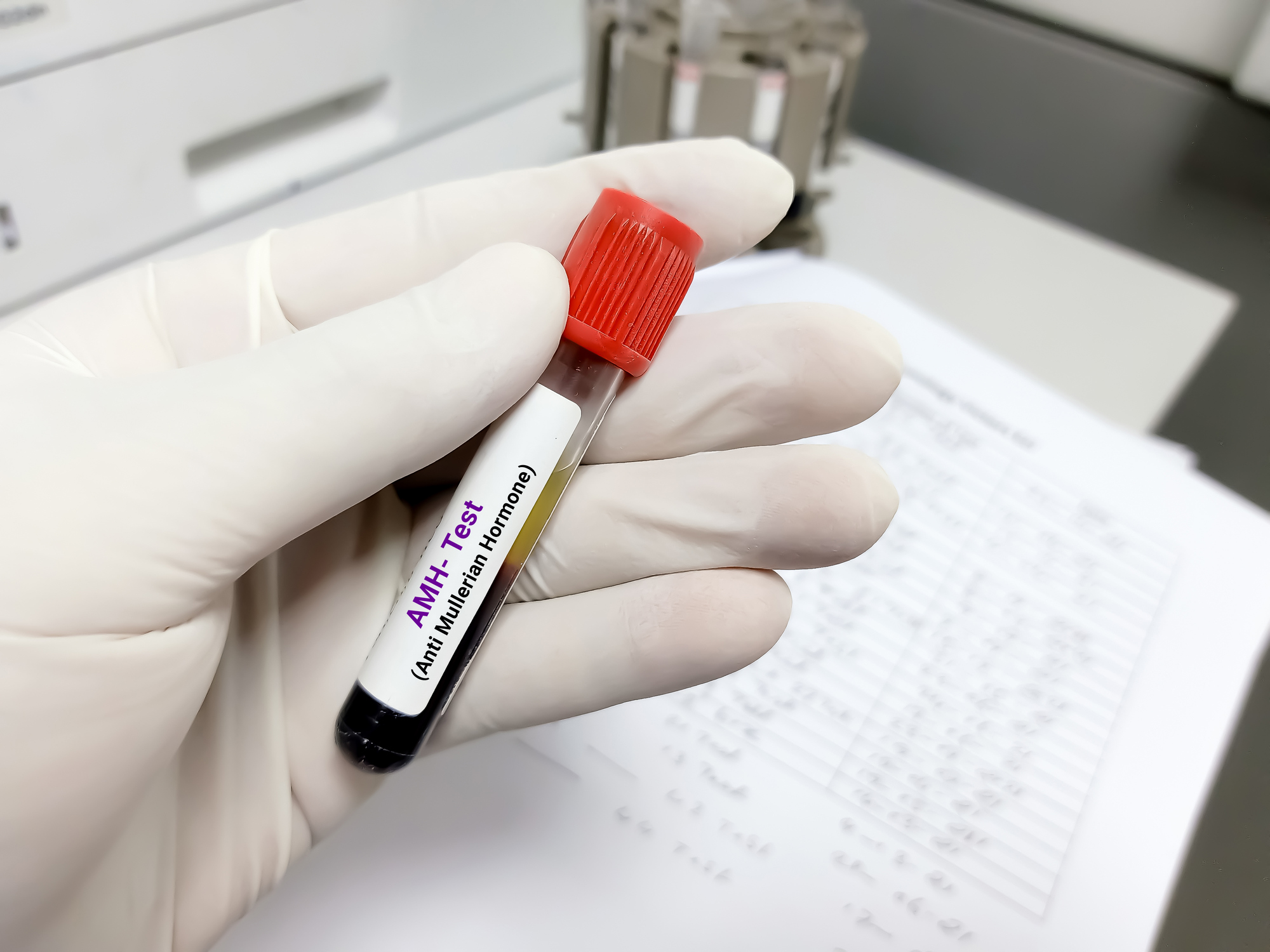
This measures roughly how many eggs you have. It helps inform your conception timeline and shows how you might respond to egg freezing or IVF, if either is something you're considering. It's assessed through a blood test (AMH) and a transvaginal ultrasound.
Ovulatory dysfunction.
If you're having irregular periods, certain blood tests can assess for different causes of ovulatory issues. This could include things like thyroid issues, a condition called PMOS (formerly referred to as PCOS), or other less common factors. Many of the causes of ovulatory dysfunction can be easily treated or managed.
Sperm health.
A semen sample is analyzed in a lab for count, movement, and shape, using standardized reference values. This is a foundational part of any fertility workup, since male factors contribute to roughly half of all fertility challenges couples face.
"We assumed the issue would be on my side given my sister has had difficulties conceiving. Turns out that wasn’t true. Instead, the semen analysis came back with a clear finding on my partner's end, which redirected our whole plan in a helpful way."
Uterine health.
A transvaginal ultrasound looks at the shape of your uterus and checks for fibroids, polyps, or other structural findings. If something needs a closer look, a saline sonogram (a slightly more detailed ultrasound using saline to expand the uterine cavity) may follow.
Fallopian tube health.
A hysterosalpingogram, or HSG, checks whether your fallopian tubes are open. Blocked tubes are a contributing factor in a meaningful share of fertility cases, so this is a standard piece of the workup for most patients.
"I didn't know a past STI could put me at risk for a blocked fallopian tube. I had no symptoms, so it never crossed my mind that something could be wrong. Testing found it. It wasn't the news I expected, but it gave me control and a plan that could actually work."
Genetics.
Carrier screening looks at whether you or your partner carry genes for certain inherited conditions. Most carriers are healthy themselves. This testing simply gives you information to make informed choices if you're planning a pregnancy.
Infectious diseases.
A standard panel of blood tests is typically required before most fertility treatments or when you’re trying to conceive. This protects your health and your future pregnancy, and it's a routine, expected part of the process rather than a sign that anything is wrong.
I'm nervous about what I'll learn. How can I prepare?
It's completely normal to feel some anxiety before starting this process. Many patients worry they're about to get bad news across the board. In reality, most people who go through fertility testing get a mix of reassuring findings and a few specific things to address, not a single verdict.
"I kept imagining the worst before my first appointment. What actually happened was a lot more practical: a checklist, a few scheduled tests, and a plan for what we'd do with the results. It was not an automatic sentence that I had to jump to IVF."
A few things that may help before you start:
Remember that testing is a process, not a single moment.
Results come in over a few weeks, not all at once, and each one adds a piece to the picture rather than delivering a final answer. You have control over the process, and how you want to take action in light of each finding.
Write down your questions ahead of time.
Ask your Branch Care nurse what a given result would mean for your specific situation before you test, so you know what to expect either way.
An unexpected result is information, not a verdict against your ability to have a child.
Most findings, even ones that need follow-up, come with a clear next step. Very few close off your options entirely.
You don't have to make sense of any of it alone.
Your Branch Care RN can walk through your results with you and help you figure out reasonable next steps, whatever they show.
How does Branch Care help me with fertility testing?
What you do
Book a call with your Branch Care nurse to talk through which tests make sense for your situation, typical costs and insurance coverage, and how to get scheduled.
What your Branch Care nurse does
If we work with your OBGYN practice, we can help you get scheduled for the right tests. Your nurse answers your questions, helps you understand costs and insurance, and helps you think through what your results mean for your specific goals. We also share your results with a consulting fertility specialist (REI) for expert interpretation, so you get an accurate, complete read on the full picture.
"Having one person help me keep track of which test was for what, and what each result actually meant, took a lot of the mental load off. I didn't have to be the one holding it all together."
What your OBGYN does, in partnership with a fertility specialist
Your OBGYN's office or the lab performs the blood draws, ultrasounds, and semen analysis. The consulting REI reviews your full set of results together, in the context of your age, history, and goals, and helps determine whether further testing or a treatment conversation makes sense.
Frequently Asked Questions
How long does the whole process take? Most comprehensive fertility testing can be completed within 3-4 weeks, since some tests are tied to specific points in your menstrual cycle. Your care team can walk you through a realistic timeline for your situation.
Do I need every test on this list? Not always. Your OBGYN or Branch Care RN will help you figure out which tests make sense based on your symptoms, history, and goals, as well as what testing you’ve done in the past. Patients sometimes only need a subset.
Is fertility testing covered by insurance? Coverage varies by plan and by test. As a general pattern, testing done through your OBGYN's office tends to be covered more consistently than the same testing done at a fertility clinic, since many insurance plans treat fertility clinic visits differently from routine OBGYN care. This is one of the reasons Branch Care partners with OBGYN practices for this testing. Your Branch Care nurse can help you understand what's typically covered for your specific plan and situation.
Does an abnormal result always mean I need treatment like IVF? No. Some findings simply add helpful context to your timeline. Others point toward a specific, well-understood next step, like medication for an ovulation issue or a minor procedure for a uterine finding. IVF is one option among multiple. Your Branch Care team will help you understand how your diagnostic findings, as well as your personal preferences and goals, point towards different options.
Do male partners need to be tested too? Yes, it’s strongly recommended. Since sperm health contributes to roughly half of fertility challenges, a semen analysis is a standard and important part of a comprehensive workup.
Are there additional tests that I need to do if I’m planning to use a sperm donor to conceive? Yes, typically there is an additional blood test that your practice will run in this scenario. Make sure to tell your Branch Care nurse if you’re planning to use a sperm donor.
What if all of my tests come back normal, but I’m still not conceiving?
This is more common than most people expect, and it has a name: unexplained infertility. According to the American Society for Reproductive Medicine, up to 30% of couples who go through a full fertility workup fall into this category, meaning nothing abnormal was found upon workup that would immediately explain your difficulty conceiving.
It's an understandably frustrating place to be. Normal results are good news in one sense, but it can feel hard when there’s not an obvious explanation.
A few things are worth knowing if you're in this situation:
Normal test results don't mean nothing is happening. Standard testing checks the major, well-understood pieces: whether your tubes are open, whether you're ovulating, whether sperm counts and movement are adequate, and whether your uterus is free of major structural factors or growths. It doesn't capture everything, like the quality of a given egg or subtle issues with how an embryo and the uterus interact.
Treatment doesn't require a diagnosis to work. Unlike some medical conditions, fertility treatment for unexplained infertility doesn't need a specific cause identified first. The typical approach is a few cycles of ovarian stimulation medication combined with IUI, moving to IVF if that doesn't lead to pregnancy. Both routes have real success rates for people in exactly this situation.
This isn't a dead end, it's a decision point. From here, you and your care team can talk through timing, whether to try further specialized testing, or whether to move toward treatment. There's no single right answer, and what makes sense depends on your age, how long you've been trying, and what you're comfortable with.
You don't have to figure out the next step alone. Your Branch Care RN can walk through what unexplained infertility means for your specific situation and help you think through reasonable next steps with your OBGYN or REI.
References
- American College of Obstetricians and Gynecologists. Committee Opinion No. 691: Carrier screening for genetic conditions. Obstetrics and Gynecology. 2017.
- ASRM Practice Committee. "Definitions of infertility and recurrent pregnancy loss: a committee opinion." Fertil Steril. 2020;113:533–535.
- ASRM Practice Committee. "Fertility evaluation of infertile women: a committee opinion." Fertil Steril. 2021;115(5):1255–1265.
- ASRM Practice Committee. "Evidence-based treatments for couples with unexplained infertility: a guideline." Fertil Steril. 2020;113(2):305–322.
- ASRM Practice Committee. "Testing and interpreting measures of ovarian reserve: a committee opinion." Fertil Steril. 2020;114(6):1151–1157.
- ESHRE Endometriosis Guideline Development Group. "ESHRE guideline: endometriosis." Hum Reprod Open. 2022;2022(2):hoac009.
- ASRM Practice Committee. "Evaluation and treatment of recurrent pregnancy loss: a committee opinion." Fertil Steril. 2012;98(5):1103–1111.
- Brannigan RE, et al. "Updates to male infertility: AUA/ASRM guideline (2024)." J Urol. 2024;212(6):789–799.
- Broer SL, Broekmans FJ, Laven JS, Fauser BC. Anti-Müllerian hormone: ovarian reserve testing and its potential clinical implications. Hum Reprod Update. 2014 Sep-Oct;20(5):688-701. doi: 10.1093/humupd/dmu020. Epub 2014 May 12. PMID: 24821925.
- Pritts EA, et al. "Fibroids and infertility: an updated systematic review of the evidence." Fertil Steril. 2009;91(4):1215–1223.