As reproductive endocrinologists (doctors who specialize in fertility), one of the most common questions we hear is: "My AMH is X. What does that mean?"
The answer to that question can be very individualized. It depends on your age, your fertility goals, and what you're trying to learn about your reproductive health.
In this guide, you'll learn:
- What AMH measures (and what it doesn't)
- Why standard lab ranges can be misleading
- How to interpret your AMH results
- What your AMH means for fertility planning and treatment options
By the end, you'll understand your AMH in the context of your goals, and be equipped to make informed fertility decisions in consultation with your doctor.
For OB/GYNs who may be reading this: this guide provides a framework to help patients truly understand their AMH results in the context of their age. This kind of interpretation empowers proactive decision-making about fertility timing and preservation options. When your patients understand their ovarian reserve in context, they can make informed choices earlier.
What Is AMH and What Does It Measure?
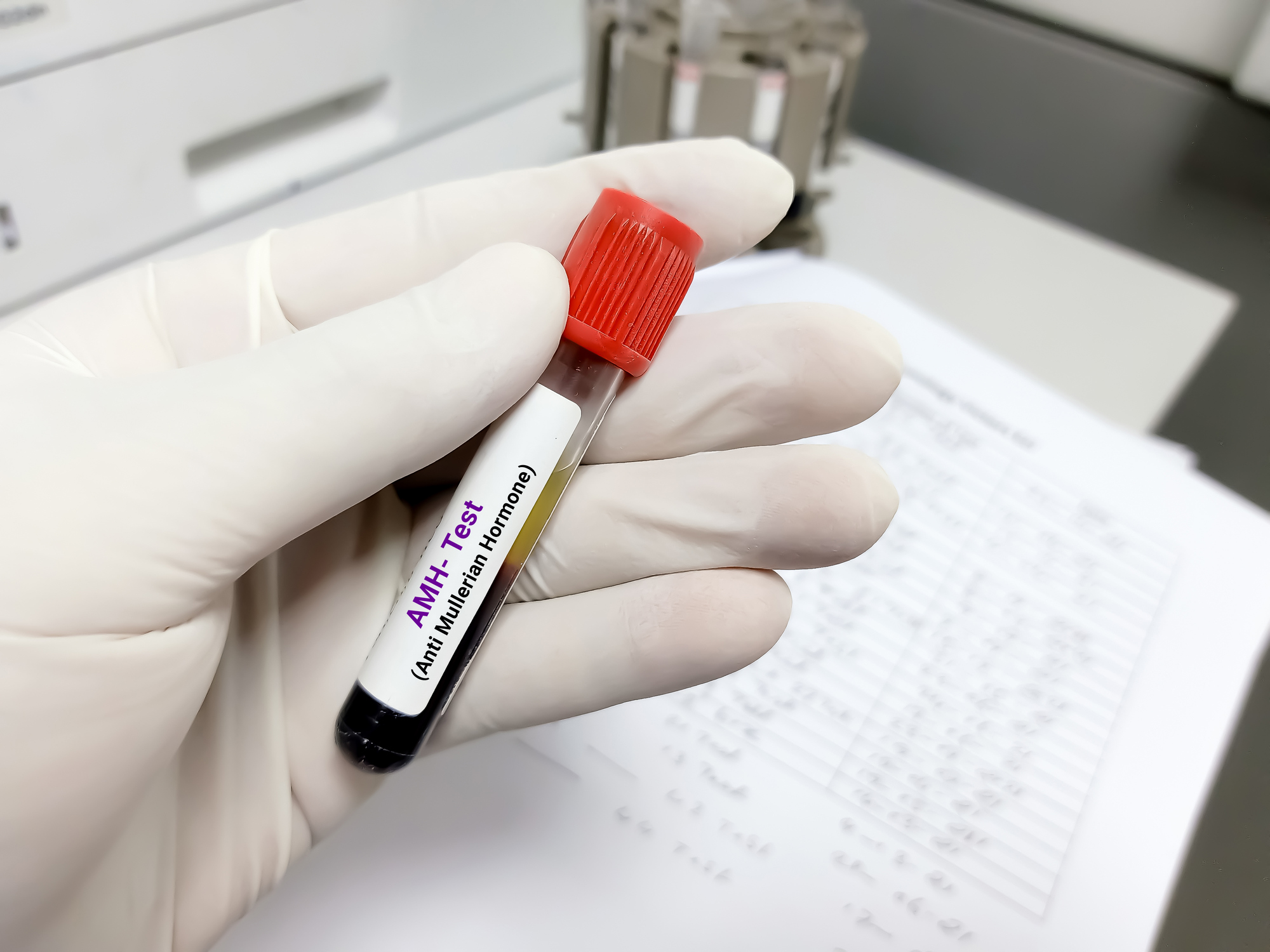
Anti-Müllerian Hormone (AMH) is one of medicine's best tools for measuring ovarian reserve, or how many eggs remain in your ovaries. You’re born with all the eggs you will have, and that number slowly, naturally goes down as you age. A simple blood test checks your AMH level and gives a clear picture of egg quantity. The test can be done any day of your menstrual cycle, which makes it easy and reliable. A higher AMH level usually means you have more eggs in your ovaries, while a lower level means fewer eggs remain.
Note: This test can also be done while taking birth control pills or other hormonal contraception, although the results may need skilled interpretation in that setting. A 2021 study in the American Journal of Obstetrics & Gynecology found that hormonal contraceptive use is associated with a lower mean AMH level than that of women who are not on contraceptives, with variability based on contraceptive methods.
Anti-Müllerian Hormone (AMH) is one of medicine's best tools for measuring ovarian reserve, or how many eggs remain in your ovaries.
How can I use this information?
Here’s how we typically guide patients on how to make sense of AMH as part of planning for their reproductive goals:
It can give insight into your reproductive timeline: While AMH can't fully predict menopause timing, we know from clinical research that women with very low AMH go through menopause earlier than average.
It can help you decide if fertility preservation (egg or embryo freezing) might be worthwhile, or if it makes sense to pursue pregnancy soon: AMH tells you your current egg supply. If you’re planning to have children in the future and your AMH is lower than expected for your age, knowing your AMH can help you decide whether to pursue pregnancy soon or whether to consider egg or embryo freezing to increase your odds of meeting your family building goals.
It can help you understand how you would respond to egg freezing or IVF treatment: AMH is one of the most important measures that helps a fertility specialist (Reproductive Endocrinologist) understand how your ovaries will likely respond to medications used in these treatments. Higher AMH typically means more eggs retrieved in each egg freezing or IVF cycle; lower AMH suggests fewer eggs and potentially the need for multiple treatment cycles.
What doesn’t AMH tell me?
The health of your eggs. AMH does not represent how healthy the eggs are (quality). Your age matters most for egg health. A 32-year-old with low AMH likely has good-quality eggs because of her age. A 42-year-old with normal AMH for her age will have more chromosomally abnormal eggs due to age alone. Egg health is a key factor for getting pregnant naturally or with fertility treatments.
How easy or hard it will be to get pregnant. AMH does not predict if you'll get pregnant on your own, without using fertility treatments. A lower number doesn't mean you can't have a baby. A higher number doesn't promise easy fertility. Multiple other factors affect your ability to get and stay pregnant – like the health of your uterus and fallopian tubes, sperm health, lifestyle factors, other medical conditions and age.
As a result, AMH is one piece of the puzzle. Your doctor should interpret it alongside your age, medical history, and other test results that evaluate other aspects of your fertility.
Why Typical Lab Reference Ranges for AMH Fall Short
When you get your AMH blood test results back, the lab often shows a broad "normal" range like 0.9–9.5 ng/mL which is meant to generally cover women of reproductive age, from their early 20s to mid-40s. Commercial laboratories design these ranges to identify the outliers. These broad ranges can make it hard to interpret what this means for your age, given your goals.
The Problem: Same Number, Different Meanings
The same AMH number means vastly different things depending on age. Consider two women with an AMH of 0.9 ng/mL:
- For a 25-year-old, this is lower than expected (most women in their mid-20s have 2.5–4.0 ng/mL). She may still get pregnant naturally, but if she's waiting to have kids, egg freezing could help save higher-quality eggs now, when she still has available eggs.
- For a 40-year-old, 0.9 ng/mL is normal and expected. By 40, most women have 0.5–1.5 ng/mL due to natural aging. She has enough eggs for treatment, but egg quality (affected most by age) is the bigger issue.
A Clinical Framework To Interpret AMH Values
As reproductive endocrinologists, we interpret your AMH in the context of your age and personal goals – like when you want to have kids and how many. This helps answer the important question: “What does this mean for my fertility options now and in the future?”
While no medical society has set reproductive age-based guidelines for interpreting AMH, numerous studies are available to help us guide patients about their results. Here's a practical framework based on current research.
More Detailed Interpretation
Very Low: <0.5 ng/mL Very limited ovarian reserve at any age. Women with AMH below 0.5 ng/mL typically retrieve very few eggs per egg freezing or IVF cycle. However, pregnancy remains possible: even women with AMH ≤0.3 ng/mL achieve healthy births through IVF, particularly with multiple cycles.
Low: 0.5-1.0 ng/mL Reduced ovarian reserve. For women in their late 30s or 40s, this is age-appropriate. For women in their 20s or early 30s, this suggests lower-than-expected reserve, potentially influencing family building timing. These women typically respond to egg freezing and IVF but may need medication adjustments and produce fewer eggs per cycle.
Low Typical: 1.0-1.5 ng/mL Lower end of typical reserve. For women under 35, this prompts discussion about fertility goals and timing. For women 35+, this is within expected parameters. Women with AMH above 1.0 ng/mL typically respond well to egg freezing and IVF.
Typical: 1.5-4.0 ng/mL Normal ovarian reserve for most reproductive ages. Women in this range typically respond well to fertility treatments like egg freezing and IVF. For women under 20 - 30, the median AMH is anywhere between 2.5 - 4.0.
High: >4.0 ng/mL May indicate polycystic ovary syndrome (PCOS). Women with PCOS often have AMH levels, 2-3x higher than normal. While high AMH suggests robust egg supply, women undergoing egg freezing or IVF need carefully monitored protocols to avoid ovarian hyperstimulation syndrome (OHSS).
Age-Specific Interpretation
Note the values below are from a 2017 study in the American Journal of Obstetrics & Gynecology.
In this study, they consider the lower limit of age-appropriate AMH values to be as follows:
What Your AMH Means for Fertility Planning
For Natural Conception (without fertility treatment)
AMH should inform urgency but not necessarily change your approach. The American Society for Reproductive Medicine notes AMH doesn't predict natural pregnancy rates well in women without diagnosed fertility challenges. However, lower AMH at younger ages might mean pursuing conception sooner, or considering fertility preservation approaches like egg or embryo freezing. While AMH can't fully predict menopause timing, we know from clinical research that women with very low AMH go through menopause earlier than average.
For IVF Planning
AMH is very valuable for predicting IVF response. Reproductive endocrinologists use AMH to:
Personalize protocols: Your reproductive endocrinologist will take this into account when deciding what medications to use and in what doses.
Set expectations: AMH predicts approximately how many eggs you’ll get from one IVF cycle. Retrieving more eggs increases chances of developing healthy embryos for transfer. AMH is related to overall likelihood of pregnancy from IVF. You can get a feel for how this works using this data-backed tool drawing from over 22,000 cycles.
Assess feasibility: Very low AMH (under 0.5 ng/mL) indicates limited egg reserve, but does not prevent you from pursuing fertility treatments. Many women with very low AMH achieve pregnancy through multiple IVF cycles, though cost, emotional toll, and time are important considerations. Individuals who are experiencing extremely low ovarian reserve may be counseled to consider whether to pursue an egg donor instead.
For Egg Freezing Decisions
AMH is similarly valuable for understanding your egg freezing response, and making decisions like:
Whether egg freezing makes sense: Very low AMH may yield too few eggs to make freezing worthwhile, though this depends on age and individual circumstances. Individuals who are experiencing extremely low ovarian reserve may be counseled to consider whether to pursue an egg donor instead.
What expectations to have of a cycle: AMH predicts approximately how many eggs you’ll get from one egg freezing cycle. Retrieving more eggs increases chances of developing healthy embryos if you decide to fertilize and use these eggs in the future. You can get a feel for how this works using this data-backed tool drawing from over 22,000 cycles.
How urgently to consider egg freezing: Patients with lower-than-expected AMH may want to move forward sooner with fertility preservation options like egg freezing.
Other Factors Beyond AMH That Impact Fertility
While AMH is valuable, fertility involves multiple variables:
Male factors: Fertility depends equally on sperm health. One-third to one-half of infertile couples have a component of male factor infertility.
Age: The single most important predictor of fertility and IVF success. Egg quality declines with age regardless of AMH.
Antral follicle count (AFC): Ultrasound measurement counting small ovarian follicles. Correlates well with AMH; viewing both together provides a more complete picture of your ovarian reserve.
Other hormones: FSH and Estradiol measured on day 3 of your menstrual cycle can provide complementary ovarian reserve information. Elevated FSH can indicate diminished egg reserve even with adequate AMH.
Medical history: Previous ovarian surgery, endometriosis, chemotherapy, or radiation can impact AMH.
Lifestyle: Smoking accelerates ovarian aging and lowers AMH. Smokers typically reach menopause 1-2 years earlier.
Uterine and tubal health: Normal ovarian reserve doesn't guarantee pregnancy if structural issues affect embryo implantation in the uterus or fertilization in the fallopian tubes.
Next Steps: Using This Information
Conversations to Have with Your Doctor about Your AMH
Before meeting with your doctor, think through your family-building goals and what you're willing to consider. This helps your doctor give you more personalized guidance. Key questions to reflect on:
- How many children do I want to have, and what's my ideal timeline?
- Would I consider egg freezing if my AMH is lower than expected for my age?
- Am I willing to try to conceive sooner than originally planned if my AMH is low for my age?
How does my AMH compare to typical values for my age? Don't accept "it's normal" without context. Ask where you fall within expected range for your specific age.
Based on my AMH, age and fertility goals, should I consider fertility treatments like egg freezing or IVF now or in the near future? This clarifies urgency and helps you plan accordingly.
If I'm considering fertility treatment, how would my AMH affect expected results? Understanding the predicted response to treatment sets realistic expectations. You can also use data-backed tools to learn more about how your AMH might influence results from egg freezing or IVF.
Remember
AMH is one piece of the puzzle. Many women with low AMH achieve healthy pregnancies. Fertility depends on multiple factors: egg quality (mainly determined by age), sperm health, uterine health, fallopian tube health, and overall medical condition.
You have more control than you may think. Understanding AMH in context enables proactive decisions about timing, treatment options, and next steps.
You deserve expert interpretation, not just a number. Current lab reference ranges don't tell the full story. Age-specific interpretation from providers who understand reproductive medicine is essential.
AMH is one piece of the puzzle. Many women with low AMH achieve healthy pregnancies. Fertility depends on multiple factors: egg quality (mainly determined by age), sperm health, uterine health, fallopian tube health, and overall medical condition.
The Branch Care Approach
At Branch Care, we believe you deserve personalized guidance through every step of your fertility journey. You shouldn’t have to become an overnight expert in fertility to figure out what your test results mean for your goals.
We partner OB/GYNs with fertility specialists (reproductive endocrinologists), ensuring you get:
- Expert interpretation of your ovarian reserve testing in the context of your age and goals
- Coordinated care between your trusted OB/GYN and fertility specialists
- Easy access to reproductive endocrinology expertise without the typical referral delays
- Treatment planning that's based on your individual circumstances
Your OB/GYN can initiate AMH testing and provide initial counseling with seamless specialist input from a reproductive endocrinologist when needed. You get continuity with providers who know you, combined with the expertise of reproductive endocrinologists who interpret results through the lens of latest research and clinical guidelines.
Ready for the next step? If your AMH results left you with questions or you want to understand your fertility timeline better, Branch Care connects you with OB/GYNs who provide personalized care with reproductive endocrinology oversight.
Note: This blog post is for educational purposes only and should not replace personalized medical advice from your healthcare provider. Always consult with a qualified reproductive endocrinologist for interpretation of your specific test results and treatment recommendations.
References
Practice Committee of the American Society for Reproductive Medicine. "Testing and interpreting measures of ovarian reserve: a committee opinion." Fertility and Sterility 114.5 (2020): 1151-1157.
Aslan K, Kasapoglu I, Kosan B, Tunali A, Tellioglu I, Uncu G. Age-stratified anti-Müllerian hormone (AMH) nomogram: a comprehensive cohort study including 22.920 women. Front Endocrinol (Lausanne). 2025 Jun 20;16:1612194. doi: 10.3389/fendo.2025.1612194. PMID: 40620793; PMCID: PMC12226283.
Broer SL, Broekmans FJ, Laven JS, Fauser BC. Anti-Müllerian hormone: ovarian reserve testing and its potential clinical implications. Hum Reprod Update. 2014 Sep-Oct;20(5):688-701. doi: 10.1093/humupd/dmu020. Epub 2014 May 12. PMID: 24821925.
Deadmond A, Koch CA, Parry JP. Ovarian Reserve Testing. [Updated 2022 Dec 21]. In: Feingold KR, Adler RA, Ahmed SF, et al., editors. Endotext [Internet]. South Dartmouth (MA): MDText.com, Inc.; 2000-. Available from: https://www.ncbi.nlm.nih.gov/books/NBK279058/
de Kat AC, Broekmans FJM, Lambalk CB. Role of AMH in Prediction of Menopause. Front Endocrinol (Lausanne). 2021 Sep 14;12:733731. doi: 10.3389/fendo.2021.733731. PMID: 34594304; PMCID: PMC8476919.
Franasiak JM, Forman EJ, Hong KH, Werner MD, Upham KM, Treff NR, et al. The nature of aneuploidy with increasing age of the female partner: a review of 15,169 consecutive trophectoderm biopsies evaluated with comprehensive chromosomal screening.
Hariton E, Shirazi TN, Douglas NC, Hershlag A, Briggs SF. Anti-Müllerian hormone levels among contraceptive users: evidence from a cross-sectional cohort of 27,125 individuals. Am J Obstet Gynecol. 2021 Nov;225(5):515.e1-515.e10. doi: 10.1016/j.ajog.2021.06.052. Epub 2021 Jun 12. PMID: 34126087.
Karaviti E, Karaviti D, Kani ER, Chatziandreou E, Paschou SA, Psaltopoulou T, Kalantaridou S, Lambrinoudaki I. The role of anti-Müllerian hormone: insights into ovarian reserve, primary ovarian insufficiency, and menopause prediction. Endocrine. 2025 Aug;89(2):338-355. doi: 10.1007/s12020-025-04265-0. Epub 2025 May 23. PMID: 40410629; PMCID: PMC12289849.
La Marca, A., et al. "Anti-Müllerian hormone (AMH) as a predictive marker in assisted reproductive technology (ART)." Human Reproduction Update 16.2 (2010): 113-130.
Martyn F, O'Brien YM, Wingfield M. Review of clinical indicators, including serum anti-Müllerian hormone levels, for identification of women who should consider egg freezing. Int J Gynaecol Obstet. 2017 Jul;138(1):37-41. doi: 10.1002/ijgo.12167. Epub 2017 Apr 28. PMID: 28378324.
Moghadam AR, Moghadam MT, Hemadi M, Saki G. Oocyte quality and aging. JBRA Assist Reprod 2022; 26: 105– 22. doi: 10.5935/1518-0557.20210026
Seifer DB, Baker VL, Leader B. Age-specific serum anti-Müllerian hormone values for 17,120 women presenting to fertility centers within the United States. Fertil Steril. 2011 Feb;95(2):747-50. doi: 10.1016/j.fertnstert.2010.10.011. Epub 2010 Nov 13. PMID: 21074758.
Tal R, Seifer DB. Ovarian reserve testing: a user's guide. Am J Obstet Gynecol. 2017 Aug;217(2):129-140. doi: 10.1016/j.ajog.2017.02.027. Epub 2017 Feb 21. PMID: 28235465.
Teng Y, Pan P, Liu C, Lin Y, Zhu X, Wu S, Yang H, Huang X, Lian F. Identify high-risk DOR women ≤ 35 years old following assisted reproduction technology through cutoffs of anti-mullerian hormone and antral follicle counts. Reprod Biol Endocrinol. 2024 Oct 25;22(1):130. doi: 10.1186/s12958-024-01298-4. PMID: 39456075; PMCID: PMC11515411.
Victoria M, Labrosse J, Krief F, Cédrin-Durnerin I, Comtet M, Grynberg M. Anti Müllerian Hormone: More than a biomarker of female reproductive function. J Gynecol Obstet Hum Reprod. 2019 Jan;48(1):19-24. doi: 10.1016/j.jogoh.2018.10.015. Epub 2018 Oct 22. PMID: 30352309.